

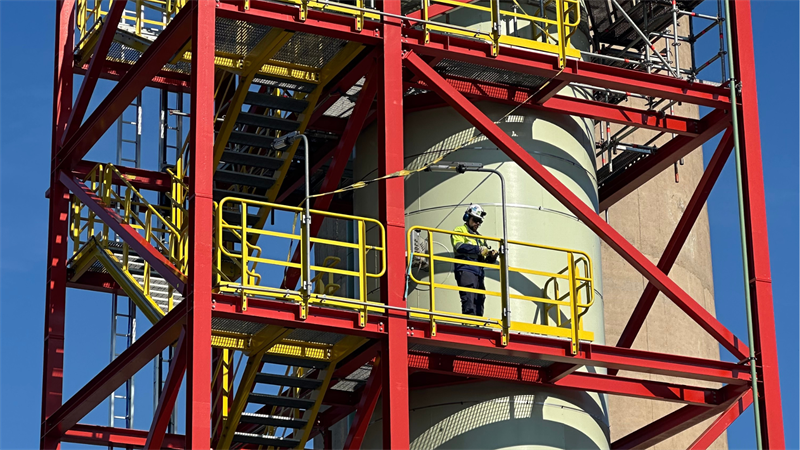
Neste’s new facility to upgrade liquefied waste plastic into high-quality petrochemical feedstock is located at the company’s existing refinery in Porvoo, Finland. Source: Neste
(IN BRIEF) Neste has commissioned a new liquefied waste plastic upgrading facility at its Porvoo refinery in Finland, marking a major step toward scaling chemical recycling technologies for the plastics industry. The EUR 111 million facility can process up to 150,000 tons of liquefied plastic waste annually, making it the largest installation of its kind globally. By upgrading oils derived from difficult plastic waste streams such as mixed plastics and contaminated materials, the facility helps convert low-quality waste into high-grade feedstock suitable for producing new plastics. The project builds on Neste’s experience in processing liquefied plastic waste since 2020 and reflects the company’s broader efforts to expand circular solutions for plastics. Using the recycled Neste RE™ product can significantly reduce fossil resource consumption and greenhouse gas emissions compared with conventional plastics production. Neste is also working with partners such as Alterra and Technip Energies to license technology that supports chemical recycling of challenging plastic waste streams, contributing to the development of more circular plastics value chains.
(PRESS RELEASE) ESPOO, 16-Mar-2026 — /EuropaWire/ — Neste has brought into operation a new upgrading facility for liquefied waste plastic at its Porvoo refinery, representing a major step forward in scaling chemical recycling technologies. The facility, built with an investment of EUR 111 million, is designed to convert liquefied waste plastic into high-quality feedstock for the plastics and chemicals industries.
With the ability to process up to 150,000 tons of liquefied waste plastic annually, the installation is currently the largest upgrading facility of its kind worldwide. Production is expected to increase gradually as operations ramp up over time.
Jori Sahlsten said the commissioning demonstrates that liquefied plastic waste can now be processed at full industrial scale. He highlighted that the project reflects Neste’s ability to develop advanced processing technologies, build new supply chains for challenging raw materials and establish robust safety standards while working closely with partners and employees to bring the project into operation.
Neste has been processing liquefied waste plastic, such as pyrolysis oil, since 2020. Work on the new facility began in 2023, when construction started alongside integration with the existing refinery infrastructure. The project reached completion at the end of 2025, and the initial ramp-up of production began in 2026. The pace of scaling operations will depend on market demand and the regulatory environment.
The facility is designed to bridge the quality gap between crude liquefied plastic waste and the refined feedstocks required by petrochemical manufacturers. Although mechanical recycling remains a key method for managing plastic waste, it is often limited by the condition and composition of the material. The Porvoo upgrading facility addresses this challenge by processing oils derived from difficult waste streams, including mixed plastics, multi-layer packaging and contaminated materials that cannot easily be recycled through conventional methods.
Maiju Helin explained that the technology supports the expansion of chemical recycling by upgrading liquefied plastic waste originating from lower-quality waste streams that would otherwise likely be incinerated or sent to landfill. By improving the quality of these materials, the facility allows them to be reused as feedstock for producing new plastics.
Helin also noted that regulatory frameworks will play an important role in enabling further progress. She pointed to current European Commission rules governing recycled content calculations under the Single Use Plastics Directive, which she said could limit the ability of refineries to contribute to the European Union’s recycling targets. Updating these rules as part of the EU Packaging and Packaging Waste Regulation would help ensure refineries can support recycled content goals while strengthening Europe’s industrial competitiveness.
At the facility, liquefied plastic waste is processed alongside crude oil using a mass balance method. This accounting approach allows the recycled content used in the refining process to be allocated to the resulting product, marketed as recycled Neste RE™.
According to lifecycle assessment data, using recycled Neste RE™ can reduce reliance on virgin fossil resources by more than 70 percent* and lower greenhouse gas emissions by over 35 percent* compared with incinerating plastic waste and producing plastics from conventional fossil feedstocks.
In addition to operating recycling infrastructure, Neste is also working to expand chemical recycling technologies through collaboration with partners including Alterra and Technip Energies. Together, the companies license liquefaction technology designed to convert hard-to-recycle plastic waste into feedstock suitable for chemical recycling processes.
*) Life Cycle Assessment on Environmental Impacts of Chemical recycling of waste plastic – Case Neste (October 2022).
Neste Corporation
Hanna Maula
Senior Vice President, Communications, Marketing, Sustainability and Public Affairs
Further information: Please contact Neste’s media service, tel. +358 800 94025 / media@neste.com (weekdays from 8.30 a.m. to 4.00 p.m. EET). Please subscribe to Neste’s releases at https://www.neste.com/media/subscribe.
Neste in brief
Neste (NESTE, Nasdaq Helsinki) is the world’s leading producer of renewable diesel and sustainable aviation fuel (SAF), with production on three continents. The company’s renewables production capacity is expected to reach 6.8 million tons annually in 2027. Neste also produces high-quality oil products at its Porvoo refinery in Finland. The company has a network of nearly 1,000 fuel stations with expanding service offering, such as EV charging, in Finland and in the Baltics.
Neste’s strategy focuses on growth in renewable fuels, which help its customers to reduce their greenhouse gas emissions. Neste is included in many international indices for its sustainability performance. In 2025, Neste’s revenue stood at EUR 19.0 billion. Read more: neste.com
SOURCE: Neste
MORE ON NESTE, ETC.:
- Digi Communications NV announces availability of Q3 2026 financial report
- Digi Communications NV announces availability of Digi Spain’s Q3 2026 financial results presentation
- Digi Communications NV announces investors call for the presentation of Q3 2026 financial results
- USFRA Brings Biofuels Evidence to Europe
- TechPunt nommé distributeur officiel de Zendure aux Pays-Bas
- TechPunt benoemd tot officiële Zendure-distributeur voor Nederland
- How Full-Color 3D Printing Brings LAIKA’s Wildwood Characters to Life
- Sešas pilsētas, trīs gadi, viena kopīga izpēte: kas notiek, kad apvienojas radošās industrijas un aprites ekonomikas prakses?
- Seks byer, tre år, én fælles undersøgelse: Hvad sker der, når kreative brancher og cirkulær økonomi mødes?
- Six villes, trois ans, une exploration commune : que se passe-t-il lorsque les industries créatives et les pratiques de l’économie circulaire se rencontrent ?
- fiskaly enters Czech market with EET 2.0 compliant solution
- Digi Communications N.V. announces exercise of share options by the executive directors of the Company
- BevZero Equipment and Tomsa Destil Announce ClearAlc Dealcoholization Technology Installation at Destilerías San Valero in Spain
- Digi Communications NV announces resolutions of the Extraordinary General Meeting of Shareholders from 15 September 2026
- THIRDREALITY präsentiert Local-First Smart-Home-Ökosystem auf der IFA 2026
- Cold Jet wprowadza na rynek system TEC1200: Czyszczenie suchym lodem wzmocnione termicznie
- A Cold Jet lança o TEC1200, que adiciona potência de limpeza térmica melhorada à limpeza com gelo seco em 2026
- Cold Jet lanza la TEC1200, que añade potencia de limpieza térmicamente mejorada a la limpieza con hielo seco en 2026
- Cold Jet lance le TEC1200 et introduit le nettoyage thermiquement assisté dans le domaine du nettoyage cryogénique en 2026 !
- Cold Jet bringt den TEC1200 auf den Markt und erweitert das Trockeneisstrahlen im Jahr 2026 um thermisch verstärkte Reinigungskraft
- Digi Communications NV announces PDMR Transactions – Grant of Conditional Stock Options to Executive Directors
- Digi Communications NV announces post-stabilisation period notice regarding the Digi Spain shares
- Digi Communications NV announces availability of H1 2026 financial report
- Digi Communications NV announces availability of Digi Spain’s H1 2026 financial results presentation
- THIRDREALITY stellt Smart Plug E3 vor – mit erweiterter Energieintelligenz und zuverlässiger Smart-Home-Leistung
- New Horizon Europe “CIRCULANDIA” project promotes circular food systems, regenerative agriculture and reusable packaging
- Digi Communications NV announces “Investors Call for the presentation of H1 2026 Financial Results”
- Digi Communications N.V. announces convening of the Company’s Extraordinary General Meeting of Shareholders for 15 September 2026
- A1 SolarStore Brings Direct Solar Buying to a European Market Stuck Behind Distributors
- Digi Communications N.V. announces admission to trading of Digi Spain shares
- Digi Communications N.V. announces pricing confirmed and books successfully covered in the initial public offering of Digi Spain shares
- Digi Communications N.V. announces approval and publication of Prospectus regarding the Initial Public Offering of Digi Spain shares
- Digi Communications N.V. announces the pricing of initial public offering regarding the shares of Digi Spain Telecom S.A.U.
- Digi Communications N.V. announces the availability of the instruction regarding the payment of share dividend for the 2025 financial year
- Digi Communications N.V. announces resolutions of the General Shareholders’ Meeting from 29 June 2026
- Digi Communications N.V. announces status update on the potential Digi Spain Telecom S.A.U. transaction – announcement of intention to float
- FranklinWH Plans European Market Entry With Residential Energy Storage System Designed for European Homes
- Okinawa Suntory Arena Becomes First Venue in Asia to Install ASB GlassFloor
- Digi Communications NV announces the availability of an updated presentation regarding Digi Spain Telecom S.A.U.
- Twilio Voice and AI power innovative Guinness Price Index
- PMI publikuje pierwszy na świecie globalny standard dotyczący wykorzystania AI w pracy projektowej, podczas gdy ramy zarządzania z trudem nadążają za postępem
- PMI pubblica il primo standard globale al mondo sull'intelligenza artificiale nel lavoro di progetto, mentre i quadri normativi faticano a stare al passo
- PMI publica el primer estándar global del mundo para la IA en el trabajo de proyectos, mientras los marcos de gobernanza luchan por seguir el ritmo
- Prime Elements GmbH Receives German Feedstock Registration
- Digi Communications NV announces framework agreement entered into by the Company’s Romanian subsidiary
- AI-POWERED VOICE HEADSET TECHNOLOGY SET TO TRANSFORM STORE OPERATIONS FOR GERMAN RETAILERS
- Digi Communications NV announces decision of the National Authority for Management and Regulation in Communications (ANCOM)
- Digi Communications NV announces 2026 AGM convocation
- Digi Communications NV announces availability of Q1 2026 financial report
- Digi Communications NV announces investors call for the presentation of the Q1 2026 financial results
- Digi Communications N.V. announces an amendment to the 2026 Financial Calendar
- Digi Communications N.V. announces availability of the Romanian-language ESEF version of the 2025 Annual Report
- Digi Communications N.V. announces availability of the non-statutory consolidated financial statements of Digi Romania S.A. for the year ended 31 December 2025
- Digi Communications N.V. announces availability of 2025 Financial report
- Digi Communications N.V. announces 2025 Financial Year dividend proposal
- Gestionar proyectos de IA con confianza: el PMI lanza la certificación PMI-CPMAI en español, que ofrece pasos prácticos para llevar a cabo con éxito proyectos de IA a los profesionales del sector en España
- Digi Communications N.V. announces status update on the potential Digi Spain Telecom S.A.U. transaction
- Digi Communications N.V. announces registration of the financial instruments resulting from the share capital increase
- Orivante Holdings Deploys AI Tools to Broaden Investor Access in Litigation Finance
- Free ICT Europe Warns of “Sovereignty Gap” in Enterprise ICT
- Europeans demand control over their digital identity
- Digi Communications N.V. announces Decision of the Board of Directors regarding the issuance of new shares
- Digi Communications N.V. announces acquisition of a 51% shareholding in Whyfibre Limited
- Digi Communications N.V. announces extraordinary general meeting’s resolution from 20 March 2026, approving the authority of the Board to issue shares on account of the Company’s retained earnings and general reserves and partially amend the Company’s articles of association
- Proteins Mosaic Q: a citizen-science project to gather evidence for a novel 3D protein structural pattern
- Digi Communications N.V. announces Registration with the FSA of the financial instruments resulting from the conversion of 16,974 A shares into an equal number of class B shares
- Digi Communications NV announces update regarding the live stream link for the Capital Markets Day 2026
- Samsung Electronics America selected EYEONIX’s COMMAND for Presentation in the United States
- Digi Communications NV announces Capital Markets Day 2026 Madrid
- Digi Communications N.V. reports preliminary consolidated revenues of 2,2 billion euros in 2025, a 15% year-over-year increase
- Digi Communications N.V. announces the resolution of the Board of Directors to convert class A shares into an equal number of class B shares for the purpose of distribution in accordance with an ongoing stock option plan
- Digi Communications NV announces Investors call for the presentation of the 2025 preliminary financial results
- Digi Communications N.V. announces Capital Markets Day 2026
Editor's pick archive....